Putting research into practice
This page showcases all project resources and platforms developed in my research group.
Agentic SPARQL Infrastructure: SPARQL-MCP, the Catalogue and the Search Engine for the Web of Data
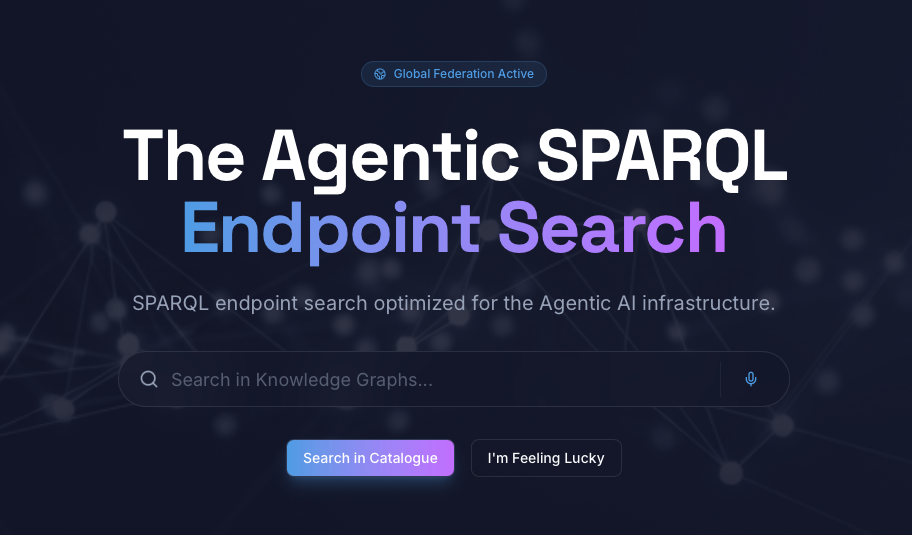
The Agentic SPARQL Infrastructure represents a paradigm shift in how Artificial Intelligence interacts with the Semantic Web. With SPARQL-MCP and the Catalogue-MCP, we enable AI agents to autonomously navigate the decentralised Web of Data - implementing the initial agentic vision for the Semantic Web.1 By leveraging the Model Context Protocol (MCP), agents can discover endpoints, explore schemas, and formulate federated SPARQL queries on-the-fly. This bridge between Large Language Models (sub-symbolic AI) and Knowledge Graphs (symbolic AI) empowers a new generation of Broad AI systems that reason over verifiable, up-to-date facts. We envision a comprehensive infrastructure of intelligent web agents and invite collaboration on:
- Complex orchestration & choreography, federated query architectures & cost models
- Integration with the Web of Things, access policies & SOLID infrastructure
- Further agentic protocols (e.g., A2A), agent integration in SPARQL endpoints
- Diverse Linked Data types (dumps, fragments), other data models (relational, graph models, GraphQL)
Open Data Inside
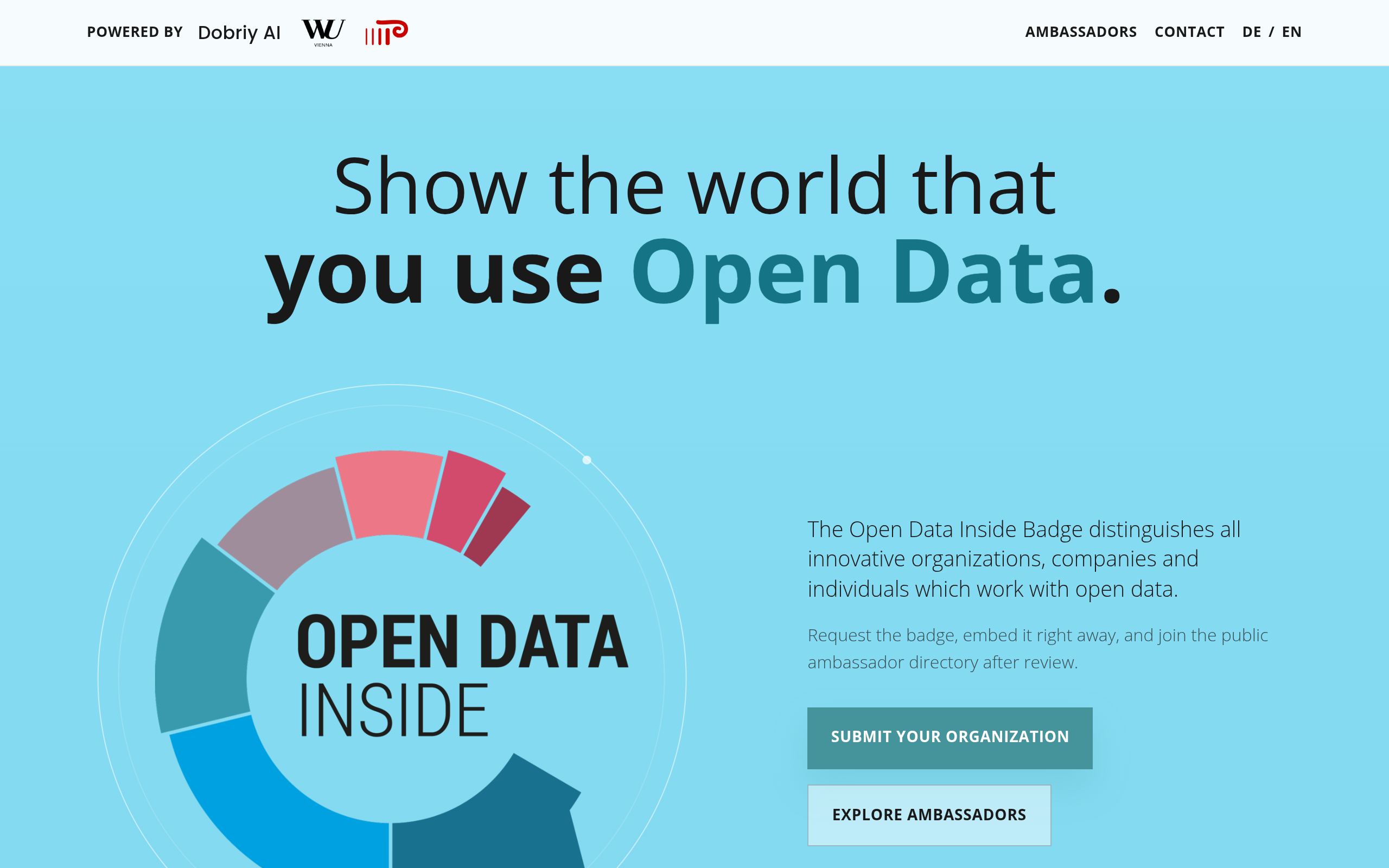
Open Data Inside. A public badge and ambassador directory for organisations, companies, public institutions, researchers, and individuals who use open data in products, services, research, and civic projects. The platform makes open data reuse visible: participants can request a badge, embed it on their own website, and appear in a searchable directory of Open Data ambassadors after review.
The project turns open data adoption into a recognisable signal, connecting badge issuance, quality assurance, and public discovery in one lightweight web platform.
SPARQL and Exploration Endpoint for the Vienna History Wiki

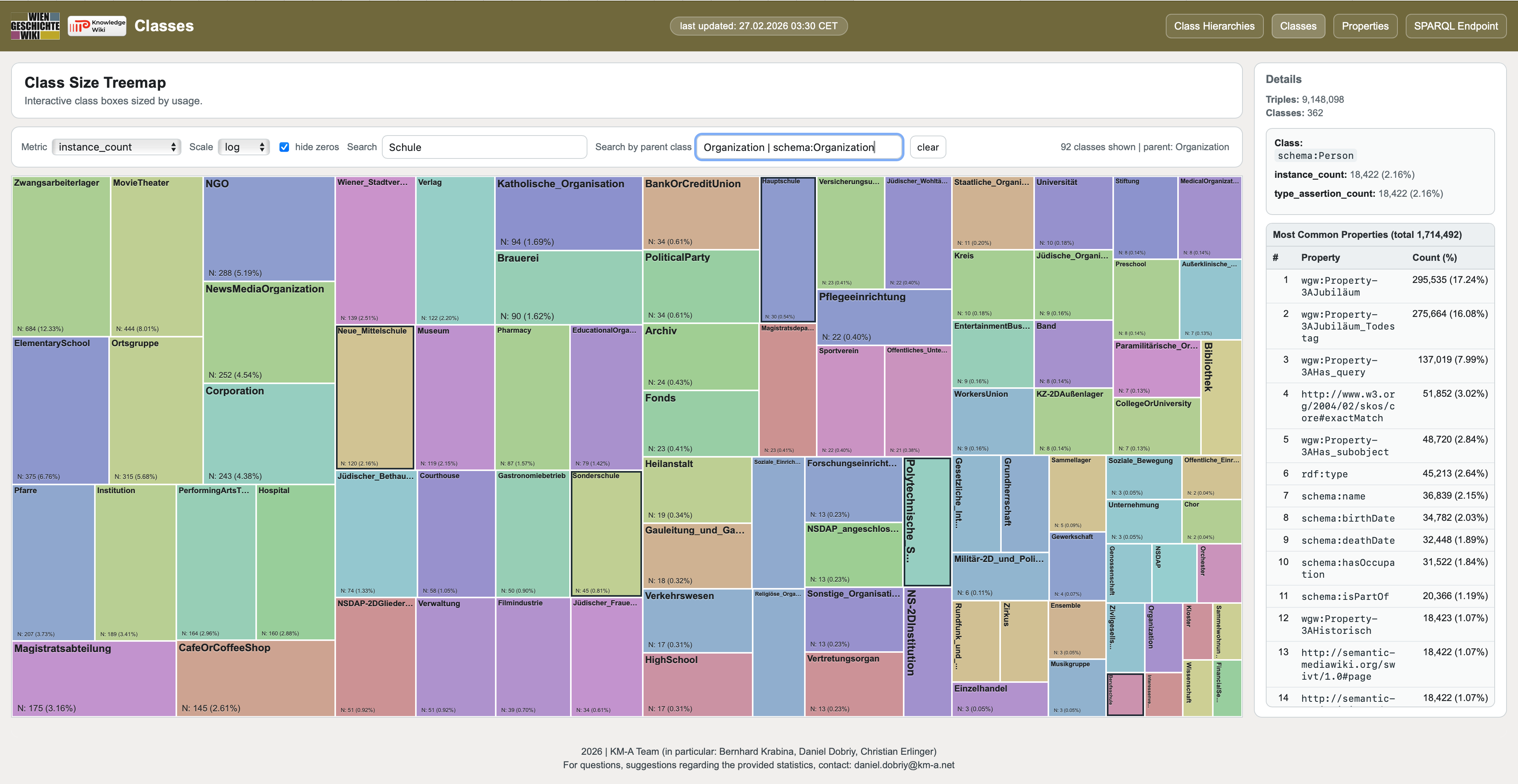
SPARQL Endpoint. Synchronised with the Vienna History Wiki on a daily basis, with automatic indexing and additional speed-oriented indexing for common query patterns relevant to experts and interested users.
Schema Exploration UI. Multiple interface patterns for schema exploration let you discover class hierarchies, inspect class and property characteristics, and understand how entities are connected. Start here to get a quick schema overview and find relevant schema entities, then move to SPARQL endpoint querying.